
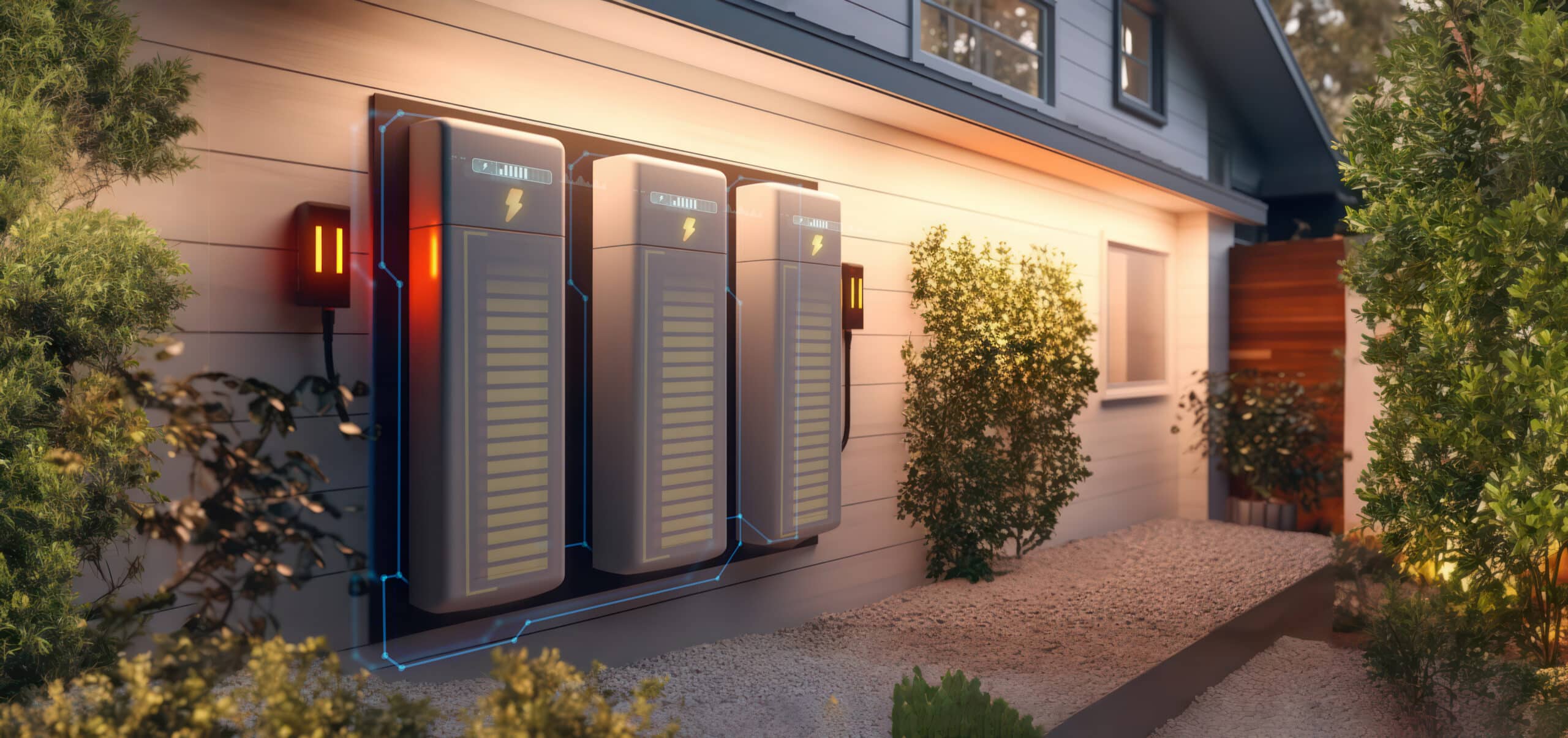

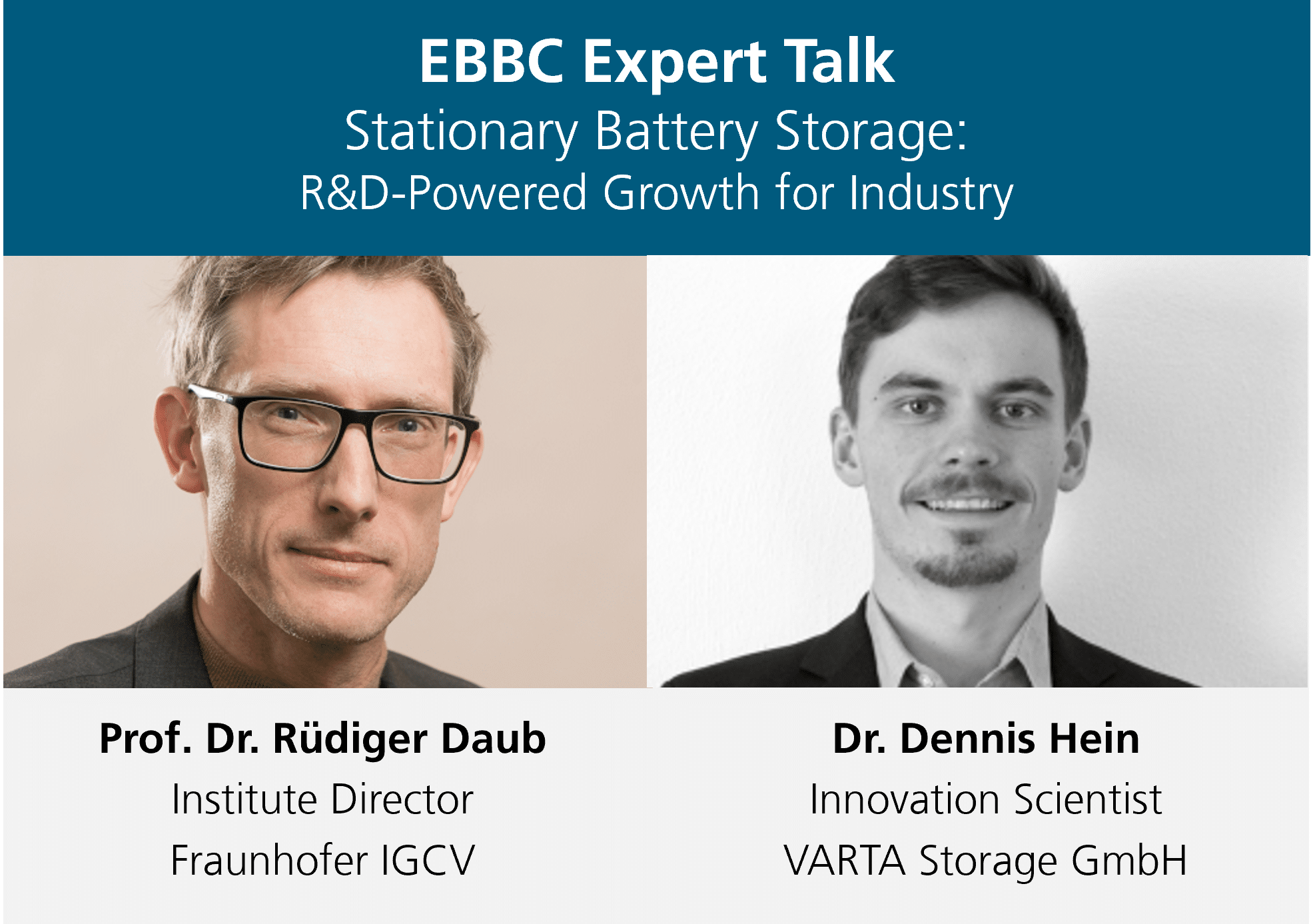
In the contemporary energy landscape, stationary battery storage has emerged as a pivotal technology for integrating renewable energy sources into the grid. On February 3rd, 2026, the European Battery Business Club (EBBC) hosted an expert talk to explore the critical role of research and development (R&D) in advancing stationary battery technologies. Insights from Prof. Dr. Rüdiger Daub and Dr. Dennis Hein illuminated current market dynamics, the challenges ahead, and innovations poised to redefine the future of energy storage. This blog article captures the key aspects of the talk.
The Growing Importance of Stationary Battery Storage
Stationary battery storage systems are increasingly recognized for their ability to stabilize energy grids, particularly as renewable energy sources like solar and wind become more prevalent. During periods of excess energy production, stationary systems can absorb surplus energy, alleviating congestion on the grid and preventing waste. Conversely, during low generation periods, these systems can discharge stored energy. Dr. Dennis Hein, Innovation Scientist at VARTA Storage concurred, stating, “The volatility of renewable energies is, in the end, the main reason why you need the storages to shift the energy from high demand, high supply times to low demand times.”
The landscape of stationary battery storage is characterized by distinct categories: residential and industrial applications. Hein emphasized that “home storage systems are booming,” which reflects a surge in consumer interest in technologies that empower households to manage their energy consumption effectively. These systems allow homeowners to harness energy generated from photovoltaic (PV) panels which reduces reliance on the grid. On the industrial side, utility-scale storage systems are gaining prominence for their capacity to support large-scale energy management initiatives.
Exploring Alternative Chemistries in Battery Storage
Ongoing research and development efforts are vital for improving the efficiency and effectiveness of stationary battery systems. Prof. Dr. Rüdiger Daub, Director of Fraunhofer Institute for Casting, Composite and Processing (IGCV), explained the functionality of storage systems: “If you look into the storages, which are within the container, then we have racks. In the racks, we have like modules. In the modules, we have the battery cells, basically.” The exploration of alternative chemistries is a critical area for optimizing storage capabilities. Daub noticed, ” Most of the time it’s a lithium-ion battery, but other battery chemistries are also possible. We should not overlook other chemistries, such as sodium-ion or even emerging solid-state technologies. In stationary storage, we don’t need high energy densities. It doesn’t matter as much how heavy the batteries are. What we really need are systems that can last longer and operate more efficiently over time.”
Optimizing Battery Storage at the System Level
In analysing R&D opportunities, the experts highlighted the potential of management systems. While China currently dominates cell prices, Europe can position itself as a leader in optimizing energy storage solutions. Daub underscored the importance of system-level optimization: “From a technical point of view, the net is running on alternating currents. We need to enhance not just the individual components but the entire system’s performance.” Similarly, Hein emphasized the need for smart battery management and system interoperability: “There’s so much changing, for example, with home energy management systems, with the interoperability between systems. This is not yet working really good.”
Stationary Battery Storage as a Business Model
As the market for stationary battery storage evolves, economic viability becomes a critical factor. Dr. Hein asserted, “Sale prices dropped, therefore the business case got stronger,” noting that the declining prices for battery systems are making these technologies more accessible. He explained, “Historically, storage systems were just there for grid services. Now they are also for arbitrage trading.” This trend can be attributed to advancements in manufacturing processes and economies of scale. Daub emphasized, “You can buy cheap electricity, you sell it later when it’s more expensive.”
The experts expanded on the market perspective regarding the opportunities of using batteries from electric vehicles (EVs) as charging infrastructure. Hein stated, “In companies for peak charging, it gets more and more interesting in the future to do load management for their charging infrastructure. If a company has 10, 20, 30, or multiple electric vehicles in their fleet, standing there around and you want to charge them in a cheap price hour, which for you as a company owner is beneficial. You want to check how to make that load management most optimized and efficient for you.”
The Future of Stationary Battery Storage
The outlook for stationary battery storage is promising, with both Daub and Hein emphasizing imminent growth in this sector. Daub noted, “We will see a huge activity in that field,” driven by technological advancements and decreasing production costs. The integration of electric vehicles into the grid further complicates this landscape but also presents new opportunities. Hein elaborated, “Especially the C&I (commercial & industrial) storages used in companies for peak charging, it gets more and more interesting in the future.” As the demand for renewable energy continues to rise, the role of stationary battery storage will become increasingly vital, necessitating further research and innovation to meet future challenges.
What does this mean for the Battery Cosmos?
The future of stationary battery storage is characterized by significant potential, driven by ongoing research and technological advancements. Insights from Prof. Dr. Rüdiger Daub and Dr. Dennis Hein highlight the vast opportunities for innovation and growth in this sector. Exploring the intersection of technology and economics, it becomes evident that a robust focus on R&D is essential for unlocking the full capabilities of stationary battery storage. By addressing challenges and harnessing opportunities the EBBC Expert Talk Series contributed meaningfully to a more resilient, efficient, and sustainable energy system.
Enroll into our Online Battery Training and broaden your knowledge in Battery Materials and the Battery Market. Don’t miss out on the opportunity and get to know cutting-edge knowledge with use cases from industry. The EBBC provides unique lifelong learning programs that can enhance your career and understanding of the rapid energy transformation.
FAQs on Stationary Battery Storage
What is the role of stationary battery storage in renewable energy?
Stationary battery storage systems stabilize energy grids by absorbing surplus energy during high production periods and discharging it during low generation times.
What future trends are anticipated for stationary battery storage?
The future of stationary battery storage expects growth driven by technological advancements, cheap cell prices, alternative battery chemistries and the integration of electric vehicles into the grid.
What are alternative battery chemistries being explored for storage systems?
In addition to lithium-ion, alternative chemistries like sodium-ion and emerging solid-state technologies are being explored to optimize storage capabilities.
How can battery management systems enhance energy storage solutions?
Battery management systems optimize the performance and longevity of battery storage by monitoring and controlling the charging and discharging processes.
Why is system-level optimization important for battery storage?
System-level optimization enhances the overall performance of energy storage solutions, ensuring they effectively integrate with the energy grid.